
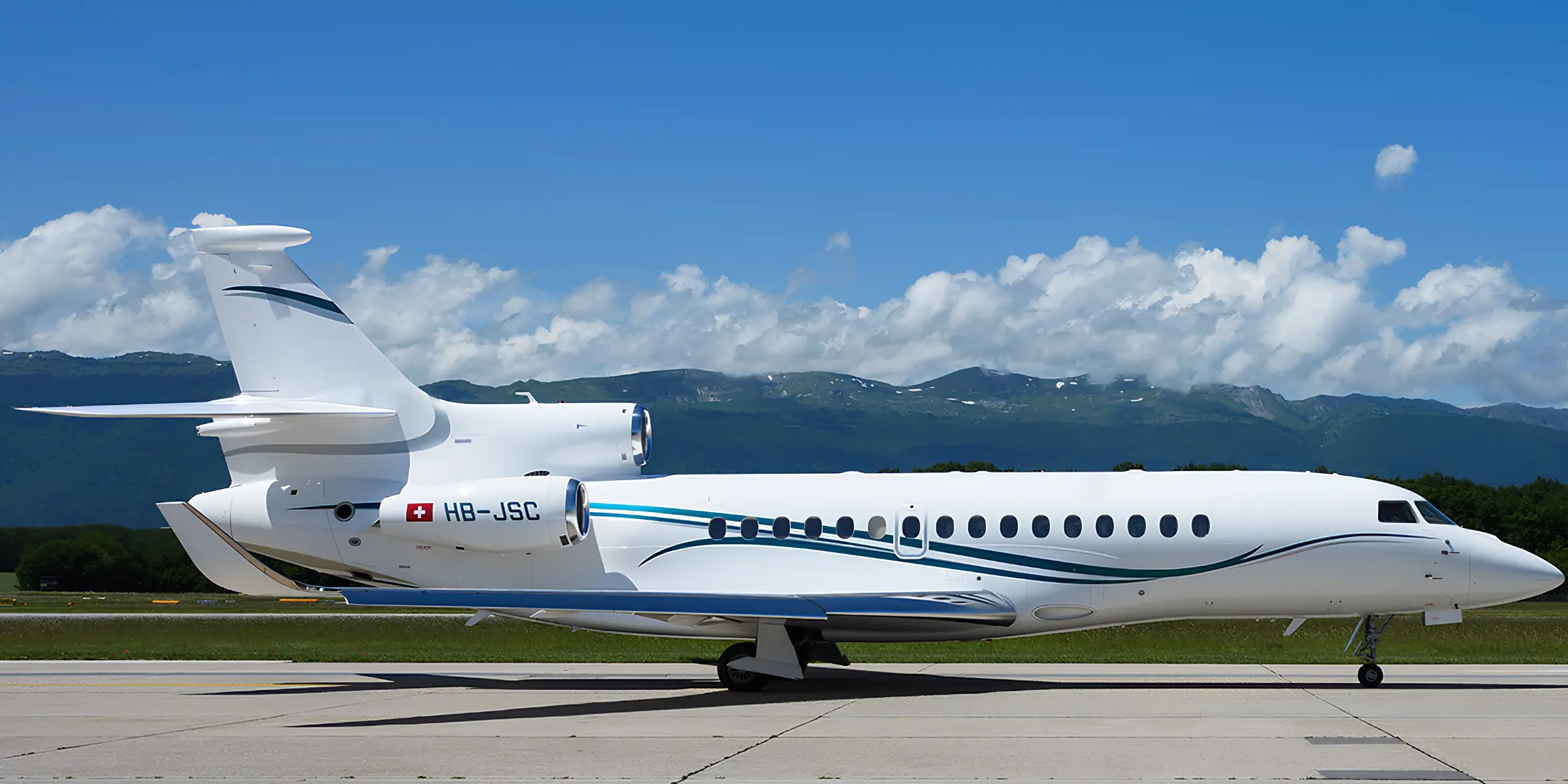
Switzerland holds a singular place in business aviation: small in geography, it ranks among the most active countries in Europe for private flights, with Geneva as its main gateway. That density owes nothing to chance. It rests on the country’s international vocation — group headquarters, international organisations, private banks, major events — on the quality of its infrastructure, and on a regulator, FOCA, whose exacting standards make the Swiss register a byword for seriousness.
Why does Switzerland weigh so heavily in business aviation?
Everything in the Swiss economy calls for the business aircraft. The country concentrates a rare density of multinational headquarters, banks and trading houses, whose executives move between financial and industrial centres spread across several continents. Geneva also hosts one of the strongest concentrations of international organisations in the world, with the diplomatic traffic that goes with it.
To this is added a calendar of events that shapes traffic each year: leading economic gatherings, watchmaking fairs, festivals, alpine sporting competitions. In those weeks, Swiss business aviation terminals rank among the busiest on the continent, according to data from theEuropean Business Aviation Association (EBAA).
Geography does the rest: at the centre of Europe, less than two hours’ flying from the major capitals, Switzerland is a natural base from which to operate. And its alpine valleys, served by demanding airfields such as Samedan or Sion, are precisely the territory where business aviation makes most sense.
What role does Geneva play?
Geneva Airport is, year after year, one of the leading business aviation platforms in continental Europe. Its advantage comes down to one word: proximity. Ten minutes separate the tarmac from the city centre, and the terminal dedicated to business aviation allows formalities to be completed in a few minutes, away from the flows of scheduled aviation.
Geneva combines several roles: gateway to French-speaking Switzerland and the Lake Geneva region, direct access to the French and Swiss alpine resorts, natural stopover between Northern Europe and the Mediterranean. The platform also has a complete ecosystem — dedicated terminals, handling services, workshops — that allows long-range aircraft to be based there on a lasting basis. It is here that our house was born in 2001, and from here that we have operated ever since, an anchorage we recount on our page The company.
Who regulates business aviation in Switzerland?
The sector is placed under the supervision of theSwiss Federal Office of Civil Aviation (FOCA), the Swiss aviation authority. It issues and controls air operator certificates (AOC), approves maintenance and continuing airworthiness organisations, and oversees crews and aircraft registered in Switzerland, recognisable by their registration beginning with HB.
Although Switzerland is not a member of the European Union, it applies the standards of the European Union Aviation Safety Agency (EASA), of which it is an associate member: a Swiss aircraft therefore meets the same technical standards as its European counterparts, with Swiss rigour on top. For this reason, the Swiss register enjoys a particular reputation among aircraft owners, which we set out in our article onthe AOC and aircraft management.
Which players are found in this market?
The Swiss ecosystem brings together every profession in business aviation: operators holding an AOC, who operate their own aircraft and those of owners; maintenance and continuing airworthiness companies; dedicated airport handling services; brokers; and the supporting professions — lawyers, trustees, specialist insurers.
Operator models vary: large international multi-type fleets on one side, specialist houses on the other. Dasnair belongs to the second family, by conviction: since 2001 we have worked only on Dassault Falcon, which we operate, manage and maintain under Swiss certificate. In a market where trust is built over time, specialisation is our way of being excellent somewhere rather than present everywhere.
What does a business flight from Switzerland look like?
Simple — and that is the whole point. Your flight request is handled within a few hours: aircraft, crew, flight plan, permits. On the day, you present yourself at the business aviation terminal shortly before departure; customs and security formalities are completed there in a few minutes, with the discretion expected. For destinations outside the Schengen area, the checks take place in the same place, with no queue.
This applies to Geneva as to the country’s other platforms, each with its own specificities: the major international gateways, with their dedicated terminals and long-haul links, and the alpine airfields, where operating windows depend on the mountains. Our article on booking an on-demand flight sets out each stage.
Frequently asked questions
What does the HB registration on an aircraft mean?
HB is the registration prefix for aircraft registered in Switzerland, followed by letters specific to each aircraft. An aircraft registered HB is placed under FOCA supervision and meets the requirements of the Swiss register.
Does Switzerland apply European aviation rules?
Yes. Switzerland takes part in the EASA system and applies the European technical standards, while keeping its national authority, FOCA, for the issue of certificates and for oversight. A Swiss operator therefore meets European standards.
Can you reach the alpine resorts by private jet?
Yes, and it is one of the country’s specialities. Airfields such as Samedan (St Moritz) or Sion serve the Alps directly, provided you fly on an aircraft and with a crew qualified for these particular approaches — which is the case for our Falcon aircraft.
Why register or have your aircraft managed in Switzerland?
For the reputation of the register, the rigour of its oversight and the stability of the legal framework. An aircraft monitored under the Swiss flag benefits from an image of seriousness recognised worldwide, which counts at the time of resale.
Based at Geneva Airport since 2001, we answer around the clock on +41 22 717 82 00.
The Dasnair operations team · Updated: September 2026